
K Show 2025 Recap: Key Takeaways from the World's Largest Plastics & Rubber Trade Fair
K 2025 drew 175,000+ visitors and 3,275 exhibitors to Dusseldorf across 8 days. Here is what happened, what mattered, and what it means for the global plastics industry.
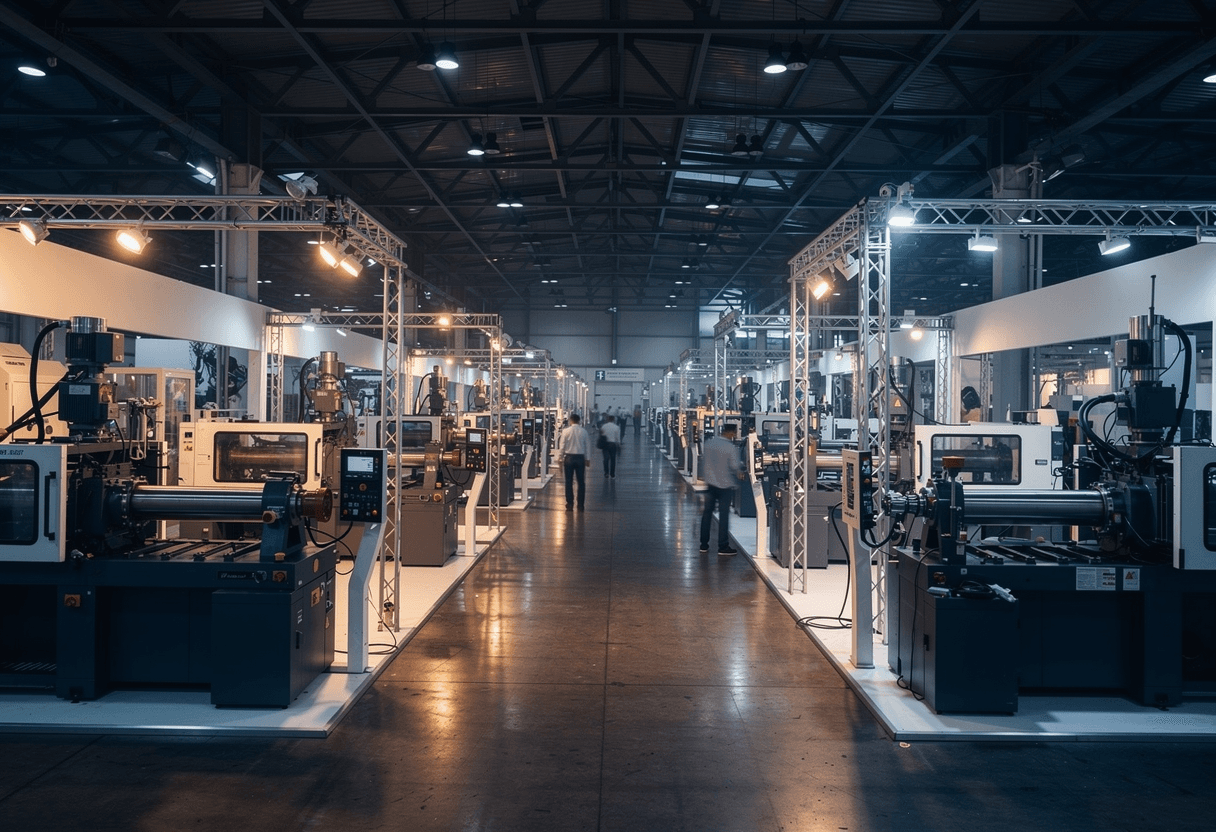
Every three years, Dusseldorf turns into the undisputed capital of the global plastics and rubber industry. K 2025 ran from October 8 to 15, 2025, and once again proved that no other trade fair on the planet draws this kind of concentration of decision-makers, engineers, and procurement chiefs under one roof.
If you missed it, here is what you need to know. If you were there, here is the data to back up what you saw.
By the Numbers: K 2025 at a Glance
The headline figures from Messe Dusseldorf tell a consistent story of a show firing on all cylinders:
- 175,000+ visitors over 8 days
- 3,275 exhibitors from 66 nations across 19 halls and 180,000 sq m of exhibition space
- 95% of attendees reported they met or exceeded their business objectives
- 67% of visitors had purchasing authority or direct influence over buying decisions
- Over 60% of visitors came from outside Germany
The global plastics market was valued at approximately $700 billion in 2024 and is forecast to grow at a CAGR of around 3.5% through 2030. K is where that market meets itself.
Why K Show Is Different from Every Other Trade Fair
Most trade shows have exhibitors. K 2025 had world premieres. Practically every major machinery manufacturer reserved their headline announcements for the Dusseldorf stage. That creates a dynamic you rarely see elsewhere: buyers are not just browsing current products, they are getting a preview of what their competitors will be running in their facilities eighteen months from now.
The triennial schedule is unusual. Unlike annual fairs where exhibitors pace their investment, K companies spend three years building toward a single show. The result is a floor full of fully operational, production-scale equipment running actual material in real time.
You can watch a multi-layer blown film line processing at commercial speed, evaluate the output quality with your own hands, and interrogate the engineering team standing six feet away. That level of hands-on technical access is essentially impossible to replicate through a website, virtual fair, or regional distributor visit.
The Four Themes That Defined K 2025
1. Circular Economy Moved from Slogan to Spec Sheet
Three years ago, sustainability at K was largely a PR exercise. At K 2025, circular economy thinking had migrated from the marketing stand to the technical specification. Multiple machinery suppliers demonstrated processing lines engineered specifically for post-consumer recyclate (PCR) content at levels that would have been commercially impractical in 2022.
Chemical recycling attracted significant floor space for the first time, with several companies showing pilot-scale pyrolysis and dissolution technology. The EU packaging regulation trajectory has given processors enough regulatory certainty to start making real capital commitments.
2. AI-Assisted Process Control Arrived on the Floor
Machine learning integration into process monitoring was visible across the machinery halls. What changed is not the concept -- predictive maintenance and vision systems have been discussed for years -- but the deployment stage. Systems were being demonstrated on production lines with documented uptime improvements and scrap reduction figures that customers can actually evaluate.
A recurring theme was closed-loop parameter adjustment: a melt-flow deviation detected by an inline sensor feeding back within seconds to adjust screw speed or temperature profile without operator intervention. For high-volume commodity processors, even a 1-2% reduction in scrap rate has a material impact on margin.
3. Asian Market Roles Grew on Both Sides
Chinese exhibitors maintained a large and technically capable presence. But arguably more significant was the volume of Asian buyers -- procurement teams from Southeast Asian packaging, automotive, and electronics manufacturers with substantial capital budgets and a clear mandate to upgrade production technology.
4. Lightweight Automotive Applications Dominated the End-Use Story
The automotive transition to electrification is reshaping plastics demand faster than most forecasts anticipated. Battery housings, thermal management components, structural lightweighting, and interior trim for EVs were prominently featured. The shift from metal to engineering plastics in EV applications is one of the strongest structural demand drivers in the industry, and K 2025 made that story concrete.
What the Visitor Mix Tells You
The geographic spread of visitors is a proxy for where global plastics investment is concentrated. The top visitor contingents tracked closely with where major capacity expansion is happening: India, Turkey, China, the United States, Italy, the Netherlands, Brazil, Poland, and Spain.
Industries represented included plastics processing, automotive and transportation, construction, packaging, electrical engineering, and medical technology. The medical plastics market is growing faster than the overall industry, driven by single-use device demand, aging demographics, and the transition from glass to polymer packaging in pharma. K 2025 had a more visible medical plastics zone than any previous edition.
The Business Case for Attending K
For an exhibitor, the cost-benefit math is straightforward if you serve global markets: there is no other venue where you can efficiently access this concentration of qualified buyers from this many geographies. The total cost of a K presence is substantial, but individual country shows and regional events do not come close to replicating the density of qualified contact.
For a visitor with purchasing authority, traveling to Dusseldorf to evaluate three competing injection molding platforms in one afternoon, with full technical teams present, is simply not replicable anywhere else. The K model -- concentrated expertise, dense access, compressed comparison -- is a genuine efficiency play for anyone making capital equipment decisions.
Looking Forward: K 2028
The next K is scheduled for 2028. The three-year gap is long enough for genuine technical generations to separate one show from the next. The technologies prominent at K 2028 are likely already in early development.
If the trajectories visible at K 2025 continue -- accelerating circular economy mandates, AI-integrated process control, EV-driven engineering plastics demand, and Asian market maturation -- the 2028 show will operate in a materially different competitive landscape.
For anyone in the plastics and rubber supply chain, that is the real takeaway from K 2025: not just what happened, but what the show reveals about where the industry is heading.