
Surf Expo September 2026: A Buyer's Guide to the 50th Anniversary Show in Orlando
Surf Expo turns 50 this September. The Sept 16-18, 2026 show at Orlando's OCCC brings 750+ exhibitors across surf, swim, paddlesports, and coastal lifestyle.
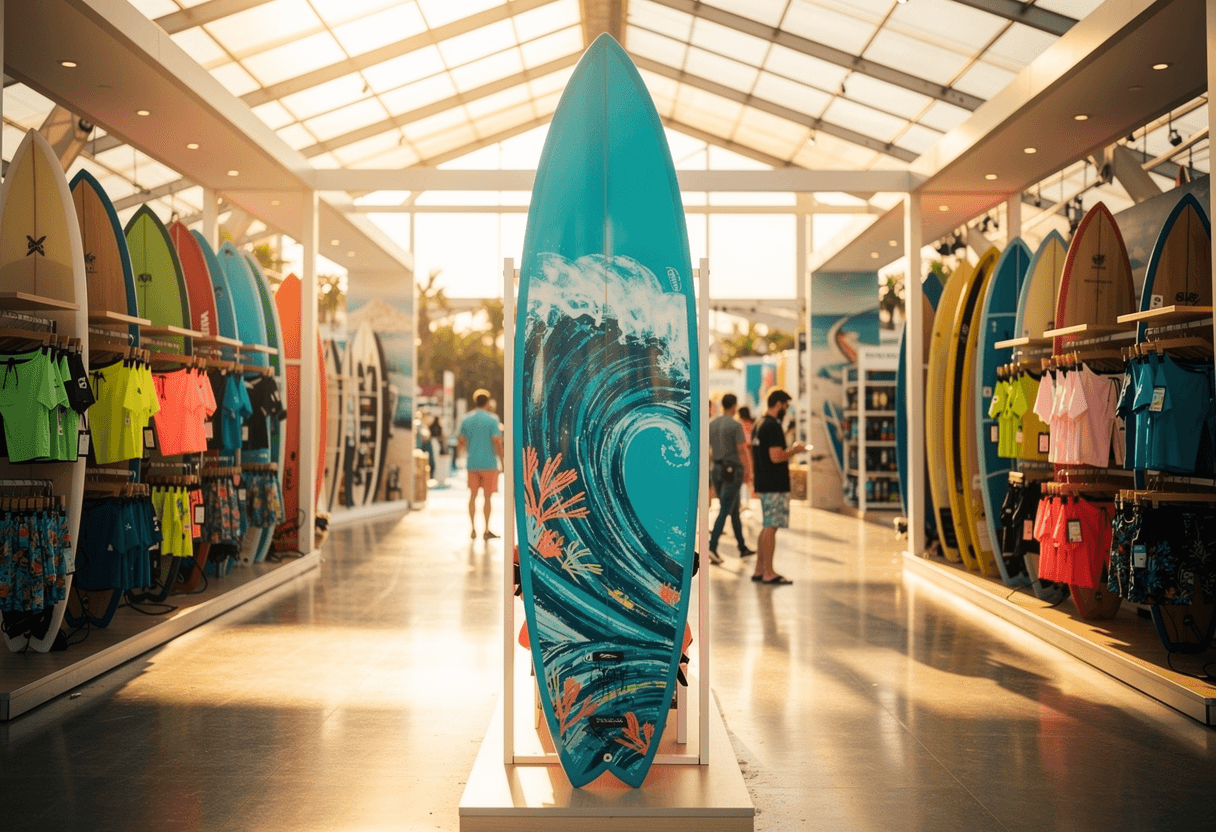
Surf Expo has been running twice a year in Orlando since 1976. 2026 is the show's 50th-anniversary year -- celebrated across both its January and September editions -- and if the January 2026 edition is any guide, the milestone is arriving at a moment when the watersports and coastal lifestyle market is in genuinely strong shape.
This guide covers what buyers and brands need to know before booking flights to Orlando this September.
Dates, Venue, and Getting There
Surf Expo September 2026 runs September 16-18, 2026 in the West Concourse of the Orange County Convention Center (OCCC) in Orlando, Florida. Show hours are 9:00 AM to 6:00 PM Wednesday and Thursday, and 9:00 AM to 4:00 PM Friday. Surf Expo is open to qualified trade only -- retailers, exhibiting manufacturers, and credentialed media, not the general public. Retail-buyer badges are free when you register roughly two weeks ahead ($25 after the deadline); first-time retailers must verify their business with a Federal Tax ID, a resale certificate or business license, two recent product invoices, and a company website.
The OCCC is the second-largest convention center in the United States. Hundreds of brands exhibit across six official categories -- Surf, Shoreline Outdoor, Boutique, Resort, Souvenir, and Gift & Decor -- with 200+ brands new to the show for September. Most buyers stay along International Drive, a short rideshare from the convention center. Orlando International Airport has direct flights from most major US cities.
The 50th Anniversary Context
Half a century is a meaningful threshold in the trade show world. Most events that survive 50 years do so by adapting -- changing audience mix, category coverage, or show format. Surf Expo's longevity reflects both the durability of the coastal lifestyle market and the organizers' ability to stay relevant through multiple industry cycles.
The watersports and outdoor recreation market runs into the tens of billions of dollars across North America by various industry estimates -- covering surfing, paddlesports, swim and dive, coastal apparel, and related outdoor categories. The pandemic-era surge in outdoor recreation participation left a durable residue: consumer interest in water-based activities remains elevated relative to pre-2020 baselines, and retail inventory cycles have largely normalized after the disruption of 2021-2023.
The January 2026 Surf Expo edition -- the 50th-anniversary kickoff -- drew more than 8,500 industry professionals and 4,100-plus qualified buyers from 60-plus countries, a 21% year-over-year jump in total attendance and a 20% rise in qualified buyers. Buyer growth -- not just total attendance -- is the number that matters most for exhibitors.
What Makes September Different from January
Surf Expo's January edition is the larger of the two annual shows, traditionally the dominant event for placing spring/summer orders. The September show has a different rhythm:
Spring and summer buying is the primary commercial engine in September. Retailers use the show to shape the following spring/summer assortments, build vendor relationships, and place forward orders while lines are still open -- the organizer reports that around 75% of surveyed buyers place orders at the event and 93% write business with new vendors. For brands with strong resort, swim, and coastal-lifestyle programs, it is a critical forward-ordering window.
A broad buyer base. Alongside domestic specialty and resort accounts, Surf Expo draws international buyers -- a useful opening for brands with export ambitions, though the buyer mix varies by edition.
A more focused floor. Industry insiders who attend both editions often describe September as slightly more focused, with a higher ratio of serious buyers to first-time visitors.
The Category Map
Understanding the floor before you arrive saves time. For 2026 Surf Expo organizes the show floor into five official categories:
Shoreline Outdoor -- the biggest structural change for the 50th year. This expanded category covers lifestyle-driven gear for rivers, lakes, and coasts, bridging surf, coastal, and outdoor retail. At the January 2026 edition it pulled in 40-plus brands (AFTCO, KEEN, ENO, Free Fly, Howler Brothers) and drew outdoor retailers like REI, Dick's Sporting Goods, L.L. Bean, and Academy Sports who don't traditionally walk a surf show. Organizers call it a primary growth engine for the years ahead.
Surf -- core hardgoods and softgoods from major brands and emerging shapers, including swim and accessories. Names like Billabong, Quiksilver, RVCA, Hurley, Salty Crew, Body Glove, and Sun Bum anchor the section.
Boutique -- elevated apparel, swim, footwear, and accessories from coastal-lifestyle and resort labels (Tommy Bahama, tasc Performance, Maui Jim, Cabana Life). This segment has grown as coastal lifestyle clothing expands beyond core surf specialty into resort, golf, and mainstream specialty retail.
Resort -- vacation-driven resort and coastal-apparel brands for hotel, cruise, and destination retail.
Souvenir -- high-volume destination and tourist-market product (Blue 84, Kanu Surf, MV Sport, Old Guys Rule) for gift-shop and resort accounts.
Gift and Decor -- coastal-inspired gift, home, and decor product (Cape Shore, Wild Republic) for specialty and destination stores.
Registered buyers span independent specialty shops through major accounts -- Target, Dillard's, Scheels, Tilly's, Disney Cruise Lines, and coastal resorts among them.
For Buyers: Getting the Most from Three Days
Do the pre-show registration work. Free buyer registration gives access to the exhibitor list and floor plan before you arrive. Building a priority visit list against a floor map is the difference between a productive three days and three days of wandering.
Block time with key accounts in advance. Major brands schedule buyer meetings before the show. Arriving without an appointment during peak hours on day one typically means waiting. Reach out three to four weeks in advance to schedule time.
Use Thursday strategically. Thursday tends to offer better floor access than Wednesday for most segments -- the first-day rush has settled, but traffic remains strong.
Walk the new exhibitor section. Surf Expo consistently brings in emerging brands each edition. These are often the most interesting product discovery opportunity -- brands not yet in your door but that could be.
Use the CONNECT matchmaking tool and the education program. Surf Expo's CONNECT tool helps buyers pre-arrange meetings with relevant brands, and the show's education sessions -- retail-expert talks on digital transformation, visual merchandising, and sustainable retailing, plus on-floor product demos -- are worth building into your schedule alongside booth visits.
For Brands: Exhibiting at the 50th
The 50th anniversary edition carries a promotional emphasis that benefits exhibitors. Show organizers typically invest in anniversary marketing, media coverage, and attendee outreach for milestone editions in ways that generate broader industry attention than a standard cycle.
For brands considering their first Surf Expo exhibit, or returning after an absence, September 2026 is a better-than-average entry point. The anniversary backdrop will bring legitimate media interest and likely stronger-than-typical buyer turnout given January 2026's attendance momentum. More than 200 brands are new to the show for September -- concrete evidence of anniversary-year pull.
For established exhibitors, the anniversary is an opportunity to invest in stand design and brand storytelling that capitalizes on the heightened industry attention.
The Broader Market Outlook
The watersports and coastal outdoor market enters the back half of 2026 in a constructive position. Consumer participation in water-based recreation remains above pre-pandemic levels. Inventory positions at specialty retail have largely normalized. Strong performance of outdoor categories in recent retail seasons has prompted more conventional apparel and sporting goods retailers to allocate incremental shelf space to coastal lifestyle product.
Category dynamics at Surf Expo also reflect a broader softgoods-versus-hardgoods rebalancing. Softgoods and accessories -- where margins are higher and inventory risk lower than hardgoods -- have grown as a proportion of both the show floor and retailer buying programs.
Frequently Asked Questions
When and where is Surf Expo September 2026?
Surf Expo September 2026 runs Wednesday to Friday, September 16-18, 2026, in the West Concourse of the Orange County Convention Center, 9800 International Drive, Orlando, Florida. Show hours are 9:00 AM to 6:00 PM ET on Wednesday and Thursday and 9:00 AM to 4:00 PM ET on Friday.
Is Surf Expo open to the public?
No. Surf Expo is open to qualified trade only -- retailers, exhibiting manufacturers, and credentialed media. Consumers and the general public cannot attend. First-time retail attendees must verify their business with a Federal Tax ID, a resale certificate or business license, two recent product invoices, and a company website.
How much does a Surf Expo badge cost?
Retail-buyer badges are free when you register roughly two weeks before the show, and $25 after that deadline. Retail guests and team riders are $25 each (up to four per approved store), and non-exhibiting manufacturers pay $2,000 per person.
What product categories are at Surf Expo 2026?
The 2026 show floor is organized into six official categories: Surf (core brands, hardgoods, swim and accessories), Shoreline Outdoor (performance and active-lifestyle brands), Boutique (elevated apparel, swim, footwear and accessories), Resort (vacation-driven resort and coastal apparel), Souvenir (high-volume destination and tourist-market product), and Gift & Decor (coastal-inspired product).
What is the new Shoreline Outdoor category?
Shoreline Outdoor is Surf Expo's expanded category for lifestyle-driven gear built for rivers, lakes, and ocean coasts, bridging surf, coastal, and outdoor retail. At the January 2026 edition it featured 40-plus brands such as AFTCO, KEEN, ENO, Free Fly, and Howler Brothers, and drew outdoor retailers including REI, Dick's Sporting Goods, L.L. Bean, and Academy Sports. Show organizers call it a primary growth engine for the years ahead.
Why does the September show matter for the 50th anniversary?
2026 is Surf Expo's 50th anniversary year, celebrated across both its January and September editions. September carries the milestone's energy with more than 200 brands new to the show, exclusive 50th-anniversary giveaways, and heightened industry attention, making it a strong entry point for first-time or returning exhibitors.
How well attended is Surf Expo?
The January 2026 edition drew more than 8,500 industry professionals, including over 4,100 qualified buyers from more than 60 countries -- a 21% year-over-year increase in total attendance and a 20% rise in qualified buyers. More than 750 brands exhibited.
One More Reason to Book the Trip
There is a practical reality about trade shows that does not appear in any market report: the hallway and after-hours conversations are often more valuable than the formal booth visits. Industry relationships are built and maintained at events like Surf Expo in ways that email and sales calls cannot replicate.
For a show in its 50th year, that social dimension will be unusually active. People who have attended every edition will be there. New entrants seeing their first Surf Expo will be there. The combination makes for a show floor conversation quality that does not happen every cycle.
September 16-18 in Orlando. Mark the calendar.